
Financial reports for small business owners facilitate confident growth planning by revealing long term profitability trends and current asset health through balance sheets and P&L statements. By avoiding common bookkeeping errors such as mixing personal and business funds, owners ensure the data accuracy required to forecast future revenue and make informed reinvestment decisions.
Many small business owners treat financial reporting as a mere compliance exercise for tax season, viewing their ledger as a static history book rather than a strategic map. This reactive mindset often leads to decision making based on bank balances alone, which obscures the true health of your operational efficiency. To scale with confidence, you must shift your perspective and treat these reports as a clear windshield for your business. In this guide, we will examine the critical roles of the Profit and Loss statement and the Balance Sheet in measuring liquidity and growth. You will discover the vital distinction between cash flow and profit, learn to spot red flags before they compromise your stability, and master the art of trend analysis for future forecasting. We will conclude with a practical monthly checklist to ensure your data informs every strategic move you make.
Moving Beyond Compliance: Why Financial Reports are Your Business Windshield
Many small business owners treat their ledger as a chore performed solely for the benefit of the IRS. In this view, accounting is a backward-looking obligation, a record of where money went that is filed away as soon as tax season ends. At Prediction Accounting, we advocate for a shift from this rearview mirror mentality to a windshield approach. Historical data is useful only if it helps you look forward.
Engaging with reliable, forward-focused accounting services transforms raw data into a strategic roadmap. For growth-minded leaders, financial reports for small business owners are not just compliance documents; they are the primary tools used to understand their finances and plan with confidence. Decisions regarding hiring a new crew, investing in heavy equipment, or opening a second location require data-backed clarity rather than gut instinct.
This forward-looking perspective is particularly vital in Box Elder County. Local contractors and retailers often navigate significant seasonal fluctuations that can strain operations. Relying on last month's profit without forecasting next quarter’s cash flow can lead to dangerous shortages. By treating your reports as a windshield, you can anticipate these shifts, ensuring your business remains liquid and ready to capitalize on new opportunities when they arise.
The Profit and Loss Statement: Measuring Your Operational Efficiency
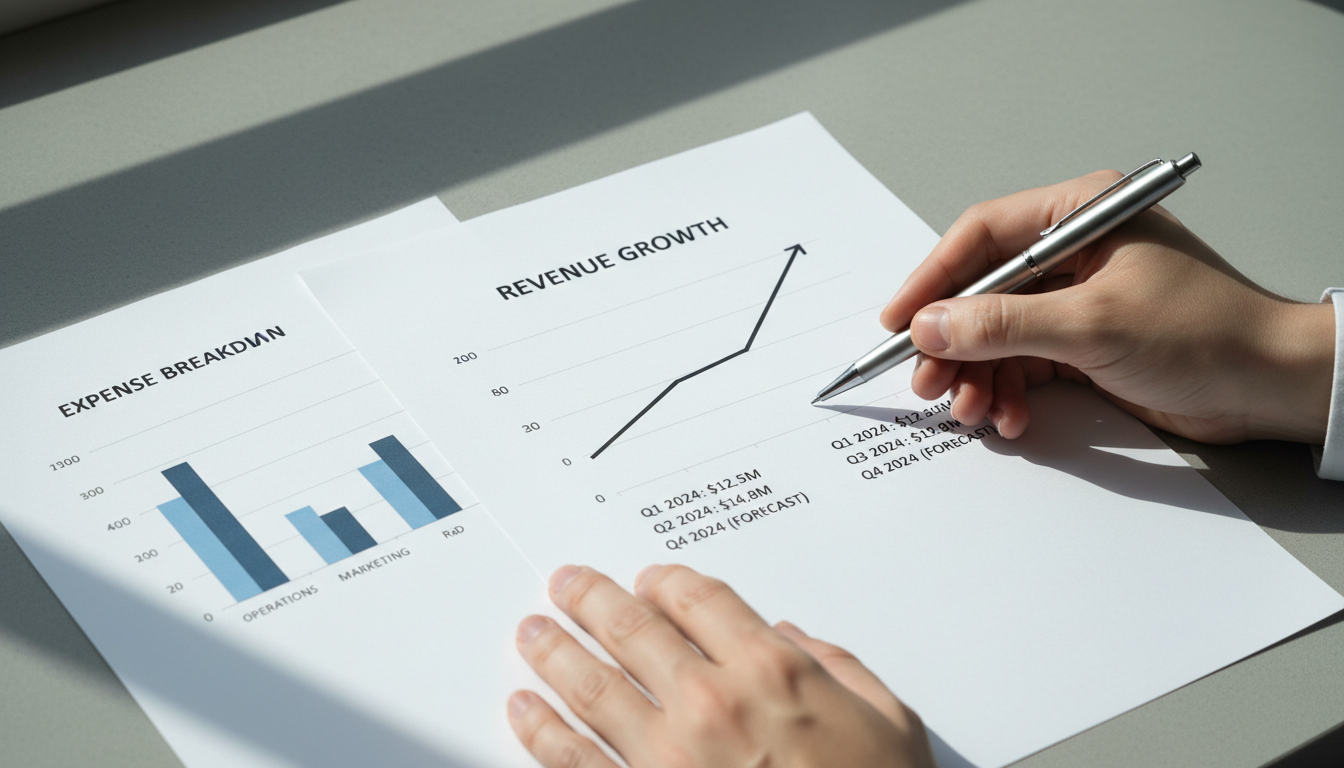
The Profit and Loss (P&L) statement, often called the Income Statement, acts as the primary scorekeeper for your daily operations. While the basic formula is revenue minus expenses equals profit, reliable, forward-focused accounting services look deeper into the layers of that profit to gauge true efficiency.
To effectively calculate profit and loss for small business, you must distinguish between Gross Margin and Net Margin. Gross Margin measures the efficiency of your direct production; for a local contractor, this is what remains after paying for materials and field labor. Net Margin is what is left after covering fixed costs like rent, insurance, and administrative salaries. If your Gross Margin is shrinking while revenue grows, you are working harder for less money. This often signals that your pricing or labor costs are out of alignment with the current market.
At Prediction Accounting, we view the P&L as a sequence of events rather than a static result. A single profitable month might be a fluke of timing, such as a large project deposit hitting the bank before the associated supply costs are billed. By analyzing trends, such as a steady rise in Cost of Goods Sold (COGS) over a six-month period, you can identify inflationary pressures before they erode your foundation. These financial reports for small business owners become actionable only when the data is reconciled and compared against historical averages. This disciplined approach ensures that a reported profit is a sustainable reality that helps you understand their finances and plan with confidence, rather than an accounting byproduct of delayed billing or seasonal spikes.
The Balance Sheet: Understanding Your Foundation and Liquidity
While the P&L measures the speed of your business, the Balance Sheet measures its stability. It acts as a financial snapshot, capturing exactly what you own (assets) and what you owe (liabilities) at a specific point in time. For a contractor in Box Elder County, assets might include a fleet of service trucks or significant accounts receivable; liabilities would encompass equipment loans, lines of credit, and upcoming vendor payments.
Understanding the interplay between these financial reports for small business owners is crucial for long-term health. A business can appear successful on a P&L by generating consistent revenue, yet remain dangerously fragile if the Balance Sheet reveals mounting short-term debt or poor liquidity. If you are profitable but your cash is tied up in aging equipment or uncollected invoices, your foundation is weaker than the income statement suggests.
Managing these balances through reliable, forward-focused accounting services ensures that your equity, which is the actual value you hold in the company, grows alongside your revenue. By evaluating your equipment equity against your total debt, you can determine if your business is truly prepared for an expansion or if you need to prioritize debt reduction. This holistic view allows you to understand their finances and plan with confidence, as it prevents the common mistake of trying to scale a business on a crumbling structural base.
Cash Flow vs Profit: The Most Critical Distinction for Small Businesses
The most dangerous misunderstanding in business finance is the assumption that profit equals cash. You can have a banner year on your P&L and still find yourself unable to meet payroll on Friday. Profit is a calculation of revenue earned against expenses incurred; cash flow is the actual movement of currency into and out of your bank account.
Consider a local contractor in Brigham City who finishes a significant kitchen remodel in late September. The business sends a $15,000 final invoice. On the Profit and Loss statement, that $15,000 appears as revenue, contributing to a healthy net income for the month. However, if the client has 30 day payment terms, that money is not yet available to buy lumber for the next job or cover the crew's wages. This timing gap is why the Statement of Cash Flows is the lifeblood of daily operations. It bridges the gap between earning a profit and actually possessing the funds.
Reliable, forward-focused accounting services look at financial reports for small business owners through the lens of timing. By tracking operating, investing, and financing activities, you can see where cash is being trapped, whether it is in uncollected receivables, excess inventory, or prepaid expenses. Forecasting these movements allows you to spot a cash crunch weeks before it hits. Instead of reacting to a low balance when it is too late, you can understand their finances and plan with confidence by adjusting project start dates or coordinating with vendors. This discipline moves you from wondering where the money went to knowing exactly when it will arrive.
How to Spot Red Flags in a Monthly Financial Report
Reading financial reports for small business owners is only the first step. To use these documents as a management tool, you must identify specific indicators that signal trouble before it becomes a crisis. These red flags are not merely bookkeeping errors; they are strategic alarms that require a shift in how you operate.
Watch for these four critical indicators in your monthly review:
Declining Gross Margins: If your margin is shrinking while your workload increases, your pricing is not keeping pace with your costs or labor efficiency is dropping.
Accounts Receivable Aging Past 60 Days: When money stays in your customers' pockets rather than your bank account, your liquidity vanishes. This is a primary cause of the cash crunches mentioned previously.
Owner Draws Exceeding Net Income: Withdrawing more cash than the business earns guts your equity and prevents you from building the foundation needed to understand their finances and plan with confidence.
Operating Expenses Growing Faster than Revenue: This suggests operational bloat or inefficiency that will eventually erode your bottom line, regardless of how much you sell.
Utilizing reliable, forward-focused accounting services helps you interpret these signals as prompts for action. If operating expenses are climbing too fast, it is time to audit recurring software subscriptions or renegotiate vendor contracts. Spotting these trends early allows you to pivot your strategy rather than reacting to a depleted bank balance.
Prediction and Trend Analysis: Turning Data into Future Strategy

Spotting red flags keeps you out of trouble; trend analysis puts you in the driver’s seat. To move from manager to strategist, you must look at your financial reports for small business owners as a timeline rather than a series of isolated events. This process involves synthesizing the "Big Three" reports to identify where the momentum in your business actually lives.
Instead of evaluating June’s performance in a vacuum, compare it to the last three Junes and the five months immediately preceding it. In Utah’s seasonal economy, this historical context is vital. A dip in June revenue might look concerning until you see it is a recurring seasonal pattern that precedes a massive July surge. By identifying these rhythms through reliable, forward-focused accounting services, you can time your hiring and inventory purchases to hit exactly when the market peaks.
This data also fuels Opportunity Identification. If your Profit and Loss statement shows a specific service line, such as specialized excavation or high-end retail finishes, growing by 20 percent month over month, the numbers are providing a directive. They are telling you exactly where to reallocate your marketing budget for the highest return on investment. When you combine this with the liquidity insights from your Balance Sheet and Cash Flow Statement, you can understand their finances and plan with confidence regarding how much risk you can safely take. Using disciplined trend analysis transforms your accounting from a historical record into a predictive engine for growth.
Actionable Steps: A Monthly Financial Review Checklist

Turning trend analysis into strategy requires a consistent rhythm of review. When financial reports for small business owners are updated in real time, the monthly closing process becomes a diagnostic checkup rather than a forensic investigation. By utilizing reliable, forward-focused accounting services, you can transform what used to be a weekend-long headache into a concise, 30-minute strategic session.
Implement this monthly checklist to maintain clarity:
Reconcile all bank and credit card accounts: Ensure every transaction is categorized to guarantee your data is accurate and trustworthy.
Compare actuals against your budget: Identify where spending exceeded expectations and where you have surplus capital to reinvest.
Review the Accounts Receivable aging report: Pinpoint invoices past 30 days and initiate follow ups to protect your liquidity.
Update your 12-week cash flow forecast: Adjust for upcoming seasonal shifts or large equipment payments to ensure you never run dry.
These disciplined practices, supported by modern tools, allow you to understand their finances and plan with confidence, keeping your business lean and prepared for any opportunity.