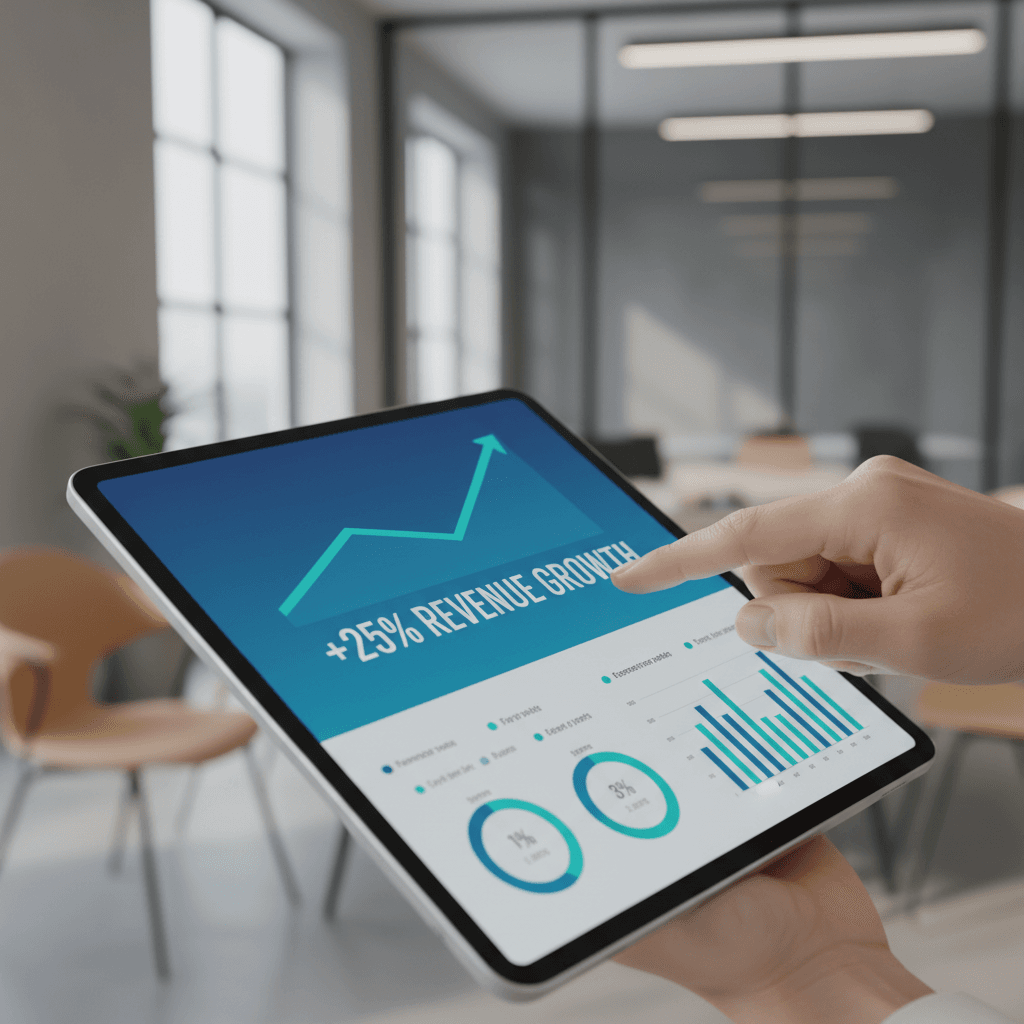
Choosing between an AI vs human accountant small business 2026 involves balancing automated efficiency with professional judgment. While AI excels at real-time data processing and automated forecasting, human accountants provide critical oversight for complex tax compliance and strategic financial planning. Most small businesses will find the greatest success by integrating advanced software for daily tasks while retaining a human expert for high-stakes decision making.
By 2026, many small business owners feel caught between the relentless speed of automated bookkeeping and the nagging uncertainty of their own financial decisions. You might have instant access to your profit and loss statements, yet you likely still find yourself staring at the dashboard wondering what those numbers actually mean for your next hire or capital investment. This tension represents the judgment gap; it is a critical space where raw data meets the nuanced reality of running a growing company. If you rely solely on algorithms, you risk losing the strategic foresight that only a seasoned expert provides. In this guide, we will analyze where AI excels in processing speed and where human insight remains essential. You will learn how to bridge this gap by combining modern tools with straightforward, expert strategy to build a resilient accounting stack for the years ahead.
The State of Small Business Accounting in 2026
By 2026, the small business accounting landscape has moved beyond simple automation into the era of agentic AI. These advanced systems no longer just extract data from receipts; they actively manage workflows, reconcile accounts across multiple platforms, and flag potential issues before a human ever opens the dashboard. While this tech-first environment offers remarkable speed, it operates within a world of increasingly complex tax codes and compliance mandates.
The primary challenge for owners is distinguishing between processing and planning. This is the heart of the AI vs human accountant small business 2026 conversation. Software is designed to look backward and record what has already occurred. In contrast, the Prediction Accounting philosophy focuses on what comes next.
While we utilize modern tools to ensure data integrity, our role is to provide the human insight that software lacks. We provide reliable accounting services that interpret data to help you understand your trajectory. By combining high-speed processing with professional judgment, we assist with cash flow management and strategic forecasting. In 2026, the most successful organizations use technology to document the past, but they rely on experienced advisors to navigate the future.
Where AI Wins: The Speed of Financial Processing

The efficiency gains from modern financial software are undeniable. By 2026, most platforms offer sophisticated automation for a monthly subscription ranging from $20 to $80, providing small businesses with tools that were once reserved for enterprise corporations. These systems excel at real-time transaction syncs and instant receipt categorization, tasks that previously consumed hours of manual labor. Recent data indicates that 53% of accountants have integrated these tools into their workflows to handle high-volume data entry and anomaly detection, such as flagging a duplicate payment or an unusual vendor charge.
When looking at the AI vs human accountant small business 2026 landscape, it is clear that technology wins on the front of pure processing speed. While these tools are powerful, they are confined to the realm of processing. They can tell you exactly where your money went, but they cannot tell you where it should go next. Automated bookkeeping focuses on historical accuracy; it ensures your ledger is balanced and your receipts are stored. However, strategic accounting requires an understanding of your business goals and the local economic climate. The Prediction Accounting team uses these tools to provide reliable accounting services that are fast and accurate, but we view the software as a foundation rather than the final product.
Task Type | Automated AI Processing | Strategic Human Accounting |
|---|---|---|
Expense Tracking | Categorizes utility bills and recurring SaaS fees | Analyzes if those subscriptions provide actual ROI |
Reconciliation | Matches bank transactions to open invoices | Identifies why a client is consistently paying late |
Reporting | Generates standard Profit and Loss statements | Interprets data for proactive cash flow management |
In this landscape, AI serves as the engine, but the business owner and their advisor remain the drivers. The software handles the routine, freeing up mental bandwidth for the complex decisions that drive growth.
The Judgment Gap: Why Strategy Still Requires a Human Touch

While technology can process millions of data points in seconds, it fails to account for the unique variables that define a business in Box Elder County. A construction contractor in Northern Utah, for instance, faces specific seasonal labor fluctuations and regional supply chain nuances that a global software algorithm simply cannot grasp. This highlights the primary limitation of AI: it lacks the forward-focus necessary to align financial data with your personal and professional objectives.
When business owners ask if AI can replace an accountant entirely, they are often overlooking the complexity of high stakes decision making. Software is excellent at following rules, but it cannot navigate the gray areas of entity structuring or complex tax planning. Choosing between an S-Corp and an LLC, or determining the optimal time to invest in heavy equipment, requires an understanding of current legislative trends and your specific long term vision. These are not just math problems; they are strategic choices that require the professional skepticism and emotional intelligence of the Prediction Accounting team.
AI limitations become most apparent in three critical areas:
Entity Structuring: Algorithms do not understand the liability and tax implications of your specific family or partnership dynamics.
Opportunity Identification: A computer might flag a high marketing spend as a negative trend, whereas a human sees a calculated move to capture a new market segment.
Regional Context: Software does not track the economic development projects specific to Northern Utah that might impact your cash flow management strategies.
By providing reliable accounting services, we bridge this judgment gap. We use the data generated by AI to ask the right questions, helping you spot growth opportunities that an algorithm would miss. In the AI vs human accountant small business 2026 debate, the human element remains the essential filter through which data becomes actionable strategy. Human advisors interpret the why behind the numbers, ensuring that your financial organization serves your future goals rather than just documenting your past.
Avoiding Common Financial Forecasting Mistakes in the AI Era
The transition from data processing to financial forecasting is where many business owners stumble. In 2026, AI tools offer one-click projections that appear polished, yet these outputs are strictly governed by the "garbage in, garbage out" principle. If your underlying data contains miscategorized expenses or one-time windfalls, the software projects those anomalies into your future as if they were permanent trends.
Three specific mistakes often emerge when relying solely on automated models:
Overestimating Revenue: Flawed AI models often utilize simple linear regression, assuming that past growth will continue indefinitely. They fail to account for market saturation or the conclusion of a specific large-scale contract that won't be renewed.
Confusing Profit with Cash Flow: This is a common software error. AI frequently looks at accrual-based profit figures but neglects the timing of actual cash flow management. A model might show you are profitable while your bank account is empty due to slow-paying clients or upcoming debt obligations.
Neglecting Seasonality: While software can recognize historical patterns, it cannot predict a shift in the Box Elder County economy or a change in regional weather that disrupts a contractor's typical cycle.
The Prediction Accounting team prevents these errors through human-led trend analysis. We scrutinize the data for sanity, adjusting for non-recurring events and verifying that your projections reflect the actual liquidity of your business. When evaluating the AI vs human accountant small business 2026 landscape, remember that software can calculate numbers, but only a human advisor can validate the assumptions behind them. Our reliable accounting services ensure that your forecasts are based on a disciplined understanding of your specific business context rather than just a mathematical extension of the past.
Security and Compliance: The Risks of an AI Only Approach
Even when forecasting models are technically accurate, the underlying security of that data remains a critical vulnerability. As AI agents become deeply embedded in financial workflows, the surface area for potential security failures expands significantly. Relying on an unmanaged, automated system creates substantial risks regarding client confidentiality and unauthorized data exposure. In 2026, regulatory scrutiny has reached a peak, as oversight bodies demand greater transparency regarding how financial data is stored and processed by autonomous algorithms.
A purely software-based approach often lacks the disciplined gatekeeper necessary to prevent sensitive information from being ingested into broad training models or exposed during a third party data breach. While AI can flag a transaction anomaly, it cannot understand the legal implications of a data leak or the nuances of changing privacy statutes. The Prediction Accounting team serves as this human firewall, ensuring that your financial records are not just categorized but also strictly protected.
We maintain rigorous standards for data integrity and legal compliance, recognizing that a breach is more than just a technical glitch; it is a threat to your business reputation. By providing reliable accounting services, we bridge the gap between high speed processing and necessary security protocols. In the debate of AI vs human accountant small business 2026, the human element provides the oversight required to navigate complex cash flow management without sacrificing the privacy of your financial data.
The Prediction Accounting Method: Combining Modern Tools with Straightforward Insight

The Prediction Accounting Method acknowledges that while technology handles the what, our team handles the so what. We leverage agentic AI to maintain clean, real time ledgers, but we apply a human insight layer to transform those numbers into actionable roadmaps. For a small business in Box Elder County, this means your data is not just sitting in a cloud; it is being scrutinized by professionals who understand the specific economic pulse of Northern Utah.
Our approach integrates disciplined financial organization with proactive cash flow management. We do not just hand you a report; we look for the growth opportunities that an algorithm might dismiss as an expense outlier. When navigating the AI vs human accountant small business 2026 landscape, the advantage of a local partner is clarity. We understand how a shift in the regional labor market or a new development project in Brigham City might impact your bottom line.
By providing reliable accounting services, the Prediction Accounting team ensures you remain compliant with evolving 2026 regulations while maintaining a forward focused posture. We use modern tools for speed and precision, but we provide the straightforward communication necessary to help you plan with confidence. This hybrid model ensures your financial foundation is secure while your strategy remains adaptable to the local market.
Conclusion: How to Build Your 2026 Accounting Tech Stack
Constructing a resilient accounting stack in 2026 requires a deliberate hybrid strategy. Start by implementing agentic software to handle daily visibility, receipt capture, and automated reconciliations. This handles the high-volume processing that once required manual entry. To secure a competitive edge, layer these tools with professional oversight for cash flow management and strategic forecasting.
The Prediction Accounting team acts as your expert filter, ensuring that the AI vs human accountant small business 2026 dynamic works in your favor. By utilizing technology for raw speed and human advisors for reliable accounting services and professional judgment, you ensure your future decisions are informed by logic rather than just algorithms. This balanced approach provides the clarity needed to navigate the Northern Utah economy with confidence.
Navigating the future of finance requires a careful balance between automated efficiency and human insight. While AI handles the heavy lifting of data processing, it cannot replicate the strategic judgment necessary for complex business decisions. If you want expert help balancing these modern tools, we are here to support your business growth. You can learn more about our mission to see how we blend technology with personal expertise to keep your small business ahead of the curve.